
Therapy Builds Confidence in Children with Autism
Meta Title: How Therapy Builds Confidence in Children with Autism | Hope Bridge Autism Centre
Meta Description: Discover how autism therapy helps children build confidence, improve communication, develop social skills, and gain independence through structured support.
Introduction
Confidence plays a vital role in a child’s emotional and social development. For children with Autism Spectrum Disorder (ASD), everyday tasks like communication, social interaction, and adapting to new situations can feel overwhelming.
Therapy provides structured support that helps children gradually develop skills, independence, and self-belief.
At Hope Bridge Autism Centre, we focus not only on skill development but also on building confidence that empowers children to thrive.
Why Confidence Matters in Children with Autism
Children with autism may experience:
- Difficulty expressing their needs
- Challenges in social situations
- Sensory sensitivities
- Fear of new environments
- Frustration due to communication barriers
When children feel understood and supported, their confidence naturally grows.
Confidence helps children:
✔ Try new activities
✔ Interact with peers
✔ Express emotions
✔ Handle small challenges
✔ Develop independence
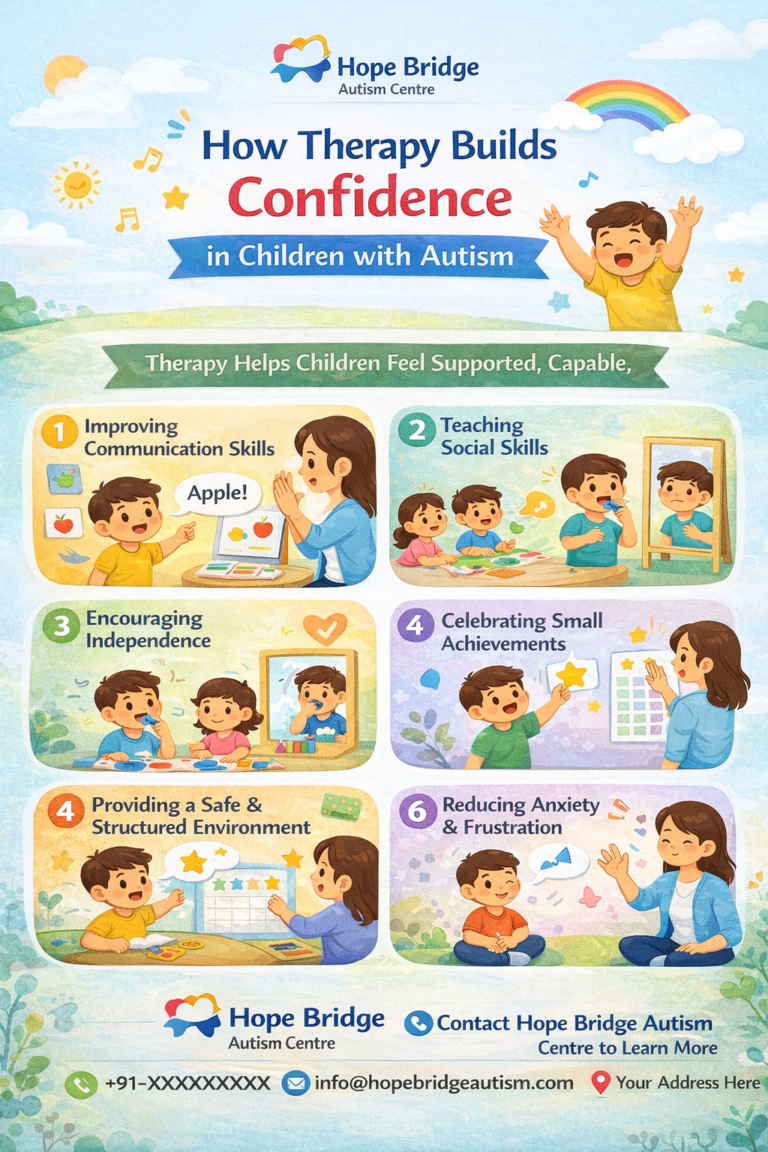
How Therapy Helps Build Confidence
Therapy works step by step, allowing children to experience small successes that lead to bigger achievements.
1️⃣ Improving Communication Skills
Speech and communication therapy help children:
- Use words or alternative communication methods
- Express needs clearly
- Ask for help
- Participate in conversations
When children can communicate effectively, frustration decreases and confidence increases.
Small improvements like saying a new word or making eye contact can create a strong sense of achievement.
2️⃣ Teaching Social Skills
Social skills training helps children:
- Take turns
- Share toys
- Recognize emotions
- Start simple conversations
Learning how to interact with others reduces anxiety and makes social environments less intimidating.
Over time, positive social experiences strengthen self-esteem.
3️⃣ Encouraging Independence
Therapy also focuses on life skills such as:
- Dressing independently
- Following routines
- Completing simple tasks
- Managing transitions
When children learn to do things on their own, they feel capable and proud.
Independence builds long-term confidence.
4️⃣ Providing a Safe and Structured Environment
Children with autism often thrive in predictable environments.
Therapy sessions provide:
- Clear routines
- Positive reinforcement
- Structured learning
- Patient guidance
This safe setting allows children to try new skills without fear of failure.
5️⃣ Celebrating Small Achievements
Confidence grows when effort is recognized.
Therapists celebrate:
- First spoken words
Improved eye contact - Successful task completion
- Better emotional regulation
Acknowledging small milestones motivates children to continue learning.
6️⃣ Reducing Anxiety and Frustration
Behavioural therapy helps children:
- Understand emotions
- Develop coping strategies
- Manage sensory sensitivities
- Respond calmly to changes
When anxiety decreases, children feel more secure and self-assured.
The Role of Early Intervention
Early therapy provides children with support during crucial developmental years.
Benefits of early intervention include:
- Faster skill development
- Stronger communication foundations
- Better emotional regulation
- Improved school readiness
Starting early allows children to build confidence as they grow.
How Parents Can Support Confidence at Home
Parents play a powerful role in reinforcing therapy outcomes.
You can:
✔ Praise effort, not just results
✔ Encourage decision-making
✔ Offer simple choices
✔ Maintain consistent routines
✔ Provide positive feedback
✔ Create opportunities for social play
Consistency between therapy sessions and home life strengthens progress.
Real Progress Takes Time
Building confidence is a gradual process.
Some days will show quick progress. Other days may feel challenging.
With consistent therapy, patience, and encouragement, children with autism can develop strong self-belief and independence.
Supporting Your Child’s Growth Journey
At Hope Bridge Autism Centre, we believe that every child has unique strengths.
Our personalized therapy programs focus on:
- Communication development
- Social interaction skills
- Emotional regulation
- Behavioral improvement
- Life skill training
We work closely with families to ensure children feel supported both inside and outside the therapy environment.
Conclusion
Therapy is more than skill-building — it is confidence-building.
Through structured guidance, positive reinforcement, and individualized support, children with autism can grow into confident, capable individuals.
If you would like to learn how therapy can support your child’s development, contact Hope Bridge Autism Centre today to schedule a consultation.
Together, we can help your child shine.